

We are getting closer and closer to the start of the college football season as we are under three weeks away from Week 0. The world of college athletics is constantly changing and when it comes to college football, it can feel like there is a lot to keep up with.
With that in mind, here are three major differences to know about heading into this upcoming college football season.
New Blood: North Dakota State and Sacramento State Make the Jump From FCS
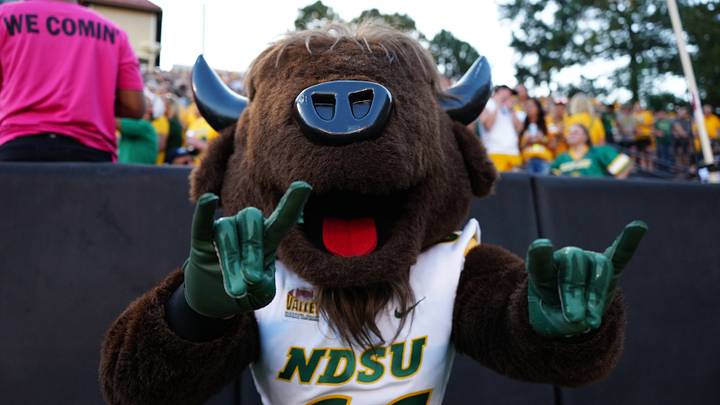
This season will feature two new teams competing at the FBS level, as the North Dakota State Bison and Sacramento State Hornets make the jump from the FCS to the FBS.
The Bison have been a perennial powerhouse at the FCS level competing in the Missouri Valley Football Conference, where they have won 12 conference titles and 10 FCS National Championships over the past 15 seasons. They’ll join the Mountain West this season and will be an immediate contender both in the conference and for the Group of Six spot in the College Football Playoff.
Sacramento State has had its fair share of ups and downs at the FCS level but will be one of the weaker teams we’ve seen make the jump to the FBS in recent history. The Hornets will compete in the MAC this season, which will make for some fun MACtion road trips. They’ll be led by first-year head coach Alonzo Carter, who previously served as Arizona’s running backs and associate head coach.
We’ve seen several teams find immediate success after making the jump from FCS to FBS, including James Madison, Liberty, and Jacksonville State. Luckily for these two programs the NCAA has changed the transition-period penalty rule, meaning both North Dakota State and Sacramento State will be immediately bowl eligible this season.
Rebirth of the Pac-12 (With a Fun New Scheduling Feature)
The Pac is back! The 2026 college football season will bring us the rebirth of the Pac-12, although it will look much different than the conference we once knew.
The conference will feature eight teams this season, including former members Oregon State and Washington State, along with Boise State, Colorado State, Fresno State, San Diego State, Texas State, and Utah State. The Pac-12 will be a non-power conference, turning the Group of Five into the Group of Six.
The conference will hold a championship game, which will be played at the highest seed’s home stadium. It will also bring one of the more interesting additions this season with the Pac-12’s flex-scheduling model for the final week of the regular season. Under the model, the league “retains the right to adjust matchups based on the best interests of the conference, including College Football Playoff (CFP) considerations at that time.”
While the new Pac-12 is far from what it once was, the new-look conference features some very fun football teams, and it will be great to have Pac-12 After Dark back.
Conference Realignment
Conference realignment has significantly shaken up the landscape of college sports in recent years, and we’ll see more movement this season. The new Pac-12 has caused some major shakeups at the Group of Six level, especially with the Mountain West in particular having to regroup after losing several teams to the revamped conference. The Mountain West will lose five teams to the Pac-12, but will replace them with three new members in Northern Illinois (MAC), UTEP (CUSA), and the previously mentioned North Dakota State (FCS).
In addition, Louisiana Tech is leaving Conference USA and moving to the Sun Belt to replace Texas State who is heading to the Pac-12. Finally as mentioned earlier, Sacramento State will be joining the MAC to replace Northern Illinois.
It may feel like a lot to keep track of, but at least we can be thankful that all four power conferences will remain unchanged from last season.
 Add us as a preferred source on Google