

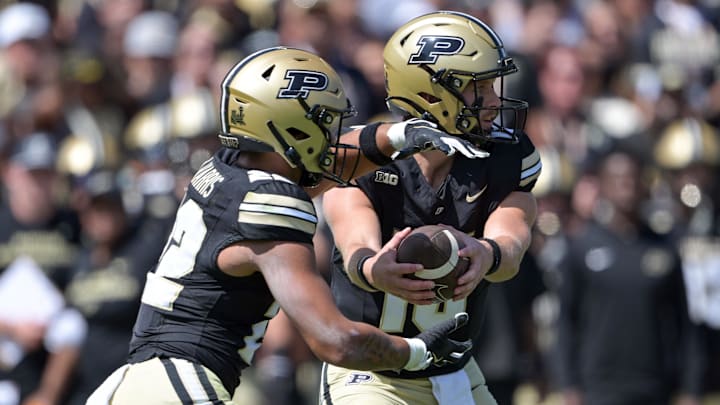
By sitting with only three wins to their name after the last two seasons, the Purdue Boilermakers are unrivaled in the race for last place. In fact, their misery is so advanced that one has to wonder what on earth they’re even bringing to the sport of college football right now (outside of cheap wins for the remotely competent).
However, I think there’s more to Purdue than simply losing, and that’s most noticeable when looking at who is—and better yet, who isn't—on its 2026 schedule, specifically in league play.
The Big Ten powers set to take on the Boilermakers this fall are as follows: UCLA, Illinois, Minnesota, Washington, Penn State, Maryland, Iowa, Wisconsin, and Indiana. In other words, no Ohio State, no Michigan, and no Oregon, each of which have done their part to headline the conference in recent years.
With that handful of hard-hitters out of the picture, surely Purdue can be competitive in the bulk of its league games, right? I mean the Boilermakers aren’t a strong team regardless of how you look at them, but when they live in a bubble with as little adversity as the Big Ten, a steep climb in success shouldn’t be too hard to come by.
Therefore, I expect to see Purdue drowning in hope come August…and yet, something tells me I won’t. Why? Because the 2026 Boilermakers stand to expose one of the biggest lies perpetuated within the CFB community: That the Big Ten has no depth.
To the average SEC supremacist, the Big Ten can’t possibly be the top dog, as it has no notable strength outside of “just a few teams.” Purdue’s upcoming path perfectly illustrates otherwise though, including five that won eight games or more in 2025 despite missing those big names previously mentioned.
There lies Purdue’s ultimate purpose in college football—to reveal the true might of the Big Ten and, while continuing to flounder on a weekly basis, add to the already-damning evidence of its place as the sport’s leading conference. That’s not much, but it’s better than suffering for nothing.
 Add us as a preferred source on Google