

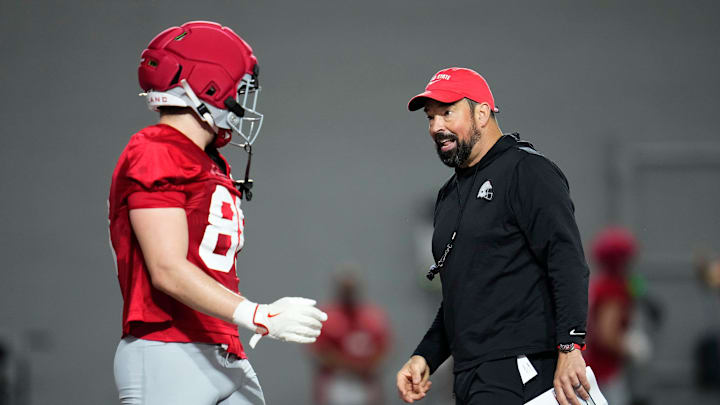
Ohio State Head Coach Ryan Day stepped up to the podium and told a story about watching a documentary on Dinosaurs and how you must adapt or die. He compared it to College Football, and, as football coaches, you must adapt or die. Ryan Day is right: in College Football, there have been more changes in the last 10 years than in the previous 50 years. As Head Coaches in sport, they must adapt and die because of the ever-changing landscape. Below are some of the changes in the sport over the last 10 years and teams that have adapted to them.
NIL
On July 1, 2021, Name Image and Likeness (NIL) went into effect, and since then, the sport has changed forever. NIL allows players to earn money for playing sports. Since then, we have seen teams and coaches adapt to it, and others have been slow to the process.
One of the most recent examples of using NIL to their benefit was Texas Tech. Led by Texas Tech booster Cody Campbell's wealth and the NIL club he created called the Matador Club. Texas Tech used NIL to lure players out of the transfer portal. This helped them win the Big 12 and make the College Football Playoffs this past season.
Then you look at a team like Alabama, which has struggled to raise money for NIL. This off-season, they lost a transfer portal battle for Hollywood Smothers, a talented running back from North Carolina State. He eventually signed with Texas. Power has shifted to the Big Ten, which has more wealth from large alumni bases to support NIL.
Transfer Portal
Transfers have always been a part of the sport, but starting in 2018, the transfer portal was created. This was created to make transferring easier for players. Since then, we have seen players transfer multiple times. Teams that embraced the transfer portal have adapted and been successful.
An example of this was Indiana. Under head coach Curt Cignetti, he used the transfer portal to acquire players who helped them win a National Championship last season. Last season, Fernando Mendoza transferred from the University of California to Indiana. He won the Heisman Trophy and was the best player on the National Championship team. Indiana is one of the worst programs in College Football history, and because of the transfer portal, they have been successful.
Other teams, like Clemson under Dabo Swinney, have struggled to adapt to the transfer portal. They have gone from being a National Championship-level team to a team that has struggled recently. Last season, they went 7-6 after having championship aspirations. Swinney has struggled to adapt to the transfer portal era. Now, recently, this off-season, Swinney did bring in 10 transfers, the most they have ever brought in as a program. Swinney might finally be adapting to the changing landscape of football.
Final Thoughts
In today’s world of College Football with NIL and the transfer portal, you must adapt, as Ryan Day said, or you will die, meaning you will lose relevance. Even Day is using that mantra as he went heavy in the transfer portal to sign 19 players, the most Ohio State has ever signed. This has allowed teams like Texas Tech and Indiana to achieve success at the highest levels they have ever seen. You must adapt, or you will die in this sport
 Add us as a preferred source on Google