

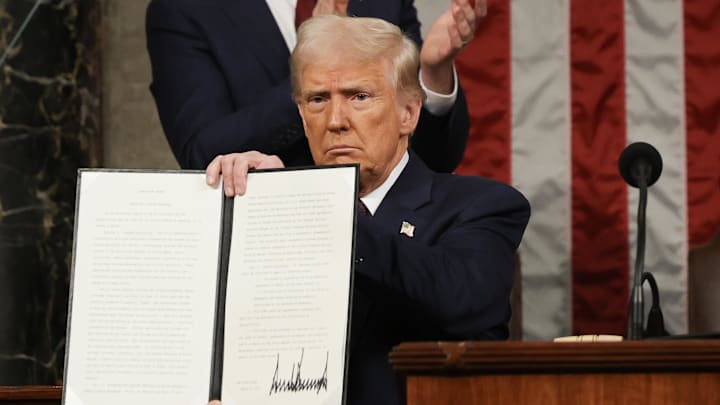
The current model of college sports, especially college football has led to calls from all over the Country to fix the sport. While NIL, Revenue Sharing, and the Transfer Portal have created a ton of positives for the players, many feel that this current model is unsustainable. In March, President Donald Trump held a roundtable with the figures in charge of college sports hoping to learn about the issues the schools and conferences are facing.
At the roundtable, Donald Trump promised that an executive order would come to help bring some power back on the NCAA's side. On Friday, that promise came true as Donald Trump signed in a gamechanging executive order for the NCAA.
Donald Trump's executive order will be met with harsh criticism
Donald Trump's executive order is expected to impact many of the current aspects of the landscape, but like we've seen with any NCAA rules, it'll be heavily contested by those who are targeted. The order plans to regulate NIL collectives while reviewing federal grant money with the potential to cut funding for schools who aren't complying with the NCAA's rules.
The latter point will be heavily contested as the federal grant money being cut would impact a ton of students who aren't athletes which the schools may be okay with given that college football drives revenue. The NCAA also moves at a snails pace and by the time rules violations are found, a new regime may be in office.
Other changes included in the executive order include giving players 5 years to play 5 seasons which will help some athletes while hurting those who do suffer injuries requiring redshirts. Players would also be given one free transfer as an undergraduate.
The next few weeks will be pivotal in telling how the schools and the players will react to the new changes. We'll likely see former players, current players, and schools begin to push back with the upcoming lawsuits to serve as precedent setters.
 Add us as a preferred source on Google