

If the run of college football dominance by the SEC is truly over -- and that looks to be the case -- then the keepers of that conference should look in the mirror when trying to see what happened. Because while most of the world points the finger at NIL and the transfer portal as the primary reasons, in truth, the SEC did it to themeselves.
NIL, revenue sharing, conference realignment, and the transfer portal all play a part in the shifting landscape of college sports, especially football. But the SEC could have survived all of that and remained the most powerful league in the sport had they simply followed their own blueprint.
The reason the SEC maintained their stranglhold on winning recruiting battles and national championships was because the best coaches, including assistants, were hired or retained. When an SEC coaching vacancy was announced, the top coaches in the country were not only courted, they were successfuly wed.
When that cycle stopped, the variables that affected everyone affected the SEC the most, and now the playing field is somewhat level among the most powerful conferences.
Some of the SEC's most visible programs blew it when making head coach hires
Some of the middle to upper tier programs began getting sloppy with hires, which should have been the red flag for what was to come. Look at some of the hiring patterns that led to things completely unraveling.
Tennessee went from Phil Fulmer to the Lane Kiffin debacle (not entirely their fault) and then a string of misfires including Derek Dooley, Butch Jones, and Jeremy Pruitt. The Vols have attempted to gain some respectability under Josh Heupel but even that hire is having diminishing returns.
Auburn dismissed Gus Malzahn only to bring in the disasters of Bryan Harsin and Hugh Freeze. What was once one of the proudest SEC football programs has become a bottom-feeder for five straight seasons.
LSU, who prided themselves on a model of strength and consistency, went from three national title-winning coaches -- Nick Saban, Les Miles, and Ed Orgeron -- to inviting the walking calamity of Brian Kelly into Baton Rouge. Now they have Mr. Social Media, Lane Kiffin, at the helm. Only time will tell if this will actually be a step up.
South Carolina boosted their program by hiring two legends, Lou Holtz and Steve Spurrier, only to trip over their own feet with Will Muschamp and Shane Beamer.
In what's been the biggest string of ho-hum hires, Florida took the glory years of Urban Meyer and threw them in the literal swamp by hiring Will Muschamp, Jim McElwain, Dan Mullen, and Billy Napier.
While none of these head coach hires by any of these programs were necessarily "bad coaches" they weren't hires that were up to the SEC standard and the programs have slipped back into mediocrity.
Then came the fatal blow. The coaching change that turned the conference on its ear.
Alabama had an opportunity to keep the SEC's dominance going
When Nick Saban announced his retirement following the 2023 it sent shock waves all over the country. But there was one thing echoing not only in Tuscaloosa, but throughout SEC country.
Alabama needed to nail this hire.
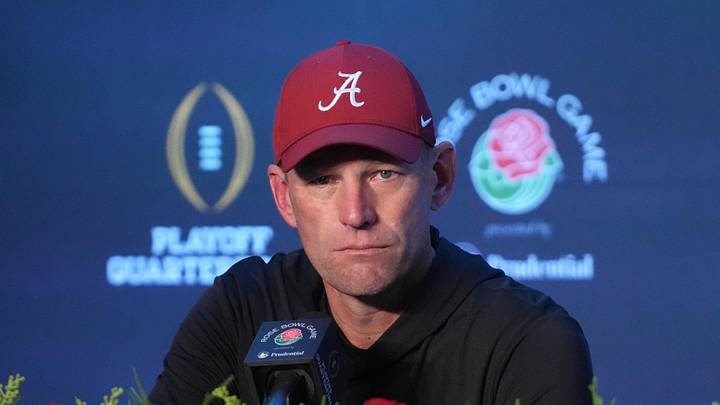
While replacing a legend is never easy, coming into a loaded roster and a program that was set up for years of success should have made it somewhat easier. Two years in, its starting to look less and less like Kalen DeBoer is the right man for the job.
Oh, DeBoer will win his share of games at Alabama, but not the important once, and certainly not the recruiting game, as evidenced by Alabama currently sitting at the bottom of the SEC's 2027 recruiting rankings.
The lack of top-tier coaches in what were once the top-tier programs in the country has the ground tremors of NIL and the transfer portal and turned them into landscape-altering quakes for the SEC. The SEC's rich are no longer getting richer, they're fighting for scraps.
Lack of due diligence, not good coaching candidates, was the pattern
The question could easily be asked, "Who were these schools supposed to hire if not the coaches they did hire?"
A fair question, with no easy answer. Sometimes the gamble is worth it. HIring a long-time assistant or coordinator with a proven track record is the most obvious way to go. But when you do that, are you ending up with Kirby Smart ... or Will Muschamp?
Even if you go out and poach a winning head coach from another program, there are no guarantees. Case in point, one Brian Kelly.
Due diligence isn't just looking at the win-loss record, or the progression of jobs on the resume, it also comes with looking at your program's culture, the way a team has been built, and -- to an extent -- the fans.
Going back to Brian Kelly, it doesn't seem possible that former LSU athletic director Scott Woodward reallly thought about any of this when he hired Kelly. There was no cultural fit, and no possible way that Woodward looked at his football program and the way Kelly coached at both Cincinnati and Notre Dame and though to himself "Yeah, this will fit like a glove".
Kelly is just a prime example. The list of poorly executed hires rattled off above screams a lack of situational awareness and fit for the program. These wern't programs that were down-and-out. They were programs having success who needed to either maintain or take the next step.
All of them regressed, and took the conference down in the process.
Bad hires are a part of the game. No school has a perfect track record. But the schools who have had long term success and who almost always find themselves in the conversation as powerhouse programs don't deviate from who they are and what made them a success.
They are true to themselves, and find quality, proven coaches who share that vision. That was always the recipe for success. The idea of doing it differently doesn't always translate into doing it better.
When you try to reinvent the wheel, bad things are going to follow, and bad things have been following the SEC for years now, and they have only themselves to blame.
 Add us as a preferred source on Google