

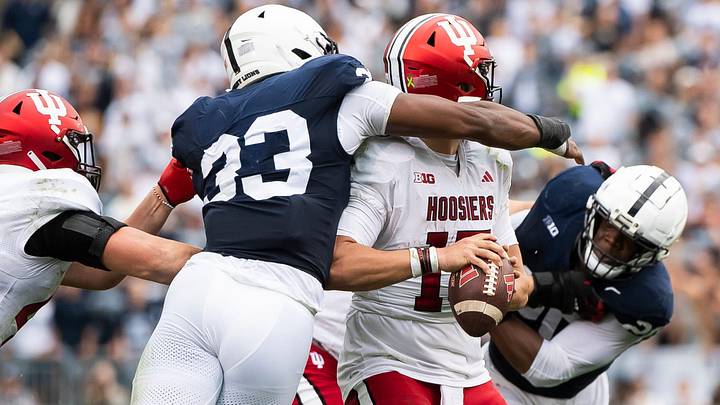
After several weeks of waiting to see what the NCAA would do about Brendan Sorsby's gambling issues, some news came out at last. Sorsby and his legal team, headed by Jeffrey Kessler, have filed for an injunction in district court in Lubbock, Texas, to preserve his eligibility with the Texas Tech Red Raiders for the 2026 season.
And they're going on the warpath - claiming that the NCAA is 'hypocritical' and slow-footing the decision on his eligibility, leaving Soresby with no options for the 2026 season.
This may seem expected in light of recent injunctions allowing players like Diego Pavia to continue their college careers against the wishes of the NCAA. But in this case, it might be a losing battle for Sorsby, as the NCAA has been very consistent in its stance in the past on players who gamble on college sports, let alone on their own team.
The legal filing alludes to this being a one-off situation, for a single player, hoping to curry favor as something that wouldn't set a future precedent. But the court is unlikely to see it that way. Other decisions have led to additional players and court cases in recent years, far from being the exception to the rules.
The NCAA issued news the same day, stating that they had not received any request for Sorsby's reinstatement. And that speaks volumes - by saying he hasn't applied for reinstatement, it can be inferred that Sorsby is currently ineligible in the NCAA's eyes.
And Texas Tech ruled Sorsby ineligible as well, which they wouldn't need to do if the NCAA wasn't already heading down that path. Tech doesn't want to be found in violation of the NCAA, and if they're going to fight for Sorsby, ruling him ineligible now, instead of waiting, bodes better for them, no matter the outcome, even if their football team takes a few steps back in the process.
The first hurdle in the legal case? No player has successfully returned to action after being ruled permanently ineligible under the NCAA's gambling rules.
The second hurdle will be the aspects of Sorsby's addictions that Kessler and his team are crafting for Sorsby's defense. While other players have had drug and alcohol addictions and returned to play, gambling comes with a different and clear set of rules that the NCAA will stand behind.
The third and final hurdle will come from the NCAA, which will likely plead before a judge that Sorsby has been gambling throughout his collegiate career, and while they sympathize that he needs treatment, they will likely argue that he has broken rules that are bedrock to their sport, and to keep the integrity of the game intact, he must not be allowed to return to play college football, as it would set a precedent and invalidate the rule against gambling at the college level.
The NCAA will also point out that pro leagues exist where Sorsby can play, such as the NFL, CFL, and XFL, while seeking help for his gambling addiction. As such, they are not forcing 'irreparable harm' upon him. And while Texas Tech may not want to give up, it's a losing bet to push for Sorsby's reinstatement while the NCAA is still privately considering his banishment.
 Add us as a preferred source on Google