

The NCAA has continued to evolve as the world of college sports continues to shift as the recent rule changes have reshaped the landscape. In the college football world, the NCAA decided to move to a single Transfer Portal window system after spending the last several years with both a fall and spring window.
The change was one that was desperately needed as players were waiting until the end of Spring practices to see where they stood on the depth chart before transferring eliminating key depth for some teams. Other schools would find out they didn't have a good enough starter at a position and poach an elite player from a lesser school leaving that team without a backup plan.
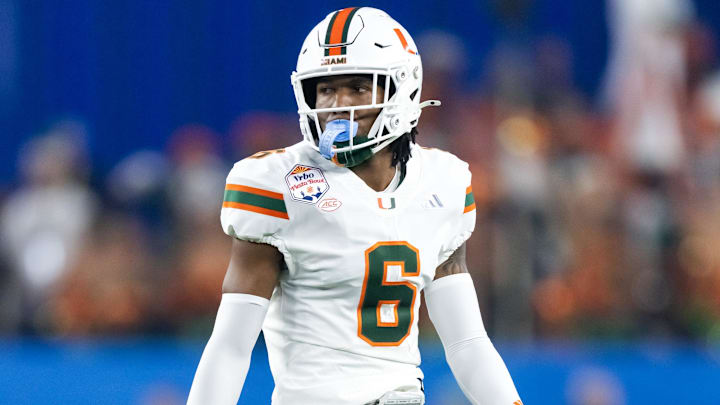
While the NCAA closed the second Transfer Portal window, everyone pointed to a potential loophole that teams and players would exploit. Players have found a way to move without the Transfer Portal by simply unenrolling at one school and enrolling at another. Former Wisconsin defensive back and current Miami Hurricanes star Xavier Lucas used this method resulting in lawsuits.
The NCAA shutsdown the blind-transfer loophole
On Wednesday, the NCAA passed "blind-transfer" legislation eliminating the loophole that put the single transfer window in jeopardy. Blind-transfer refers to when a player withdraws from their current school and enrolls at a new school outside the designated Transfer Portal window.
NEW: The NCAA has passed blind-transfer legislation for all Division I sports.
— On3 (@On3) April 1, 2026
Prohibiting programs from adding players outside portal windows, with coach suspensions and school fines as penalties.https://t.co/VCB5bjtYNg https://t.co/9shJAar0MC pic.twitter.com/98FnaOZnoy
The penalties include suspending the head coach for 50% of a season and a fine of 20% of a schools budget for that sport.
While some schools would've considered still breaking the rules if the penalties were lesser, these new roles will keep any program from adding a blind transfer. Given how much schools are spending on their teams, the 20% penalty alone would've deterred teams, but losing a head coach for half the season is the dagger.
The NCAA has now closed a major loophole for teams, and it's for the best given where the sport has headed. If there wasn't clear penalties laid out, schools and players would've circumvented the rules for their own good while leaving another program with little to no options.
While the move to close the blind-transfer loophole is genius, the NCAA still has plenty of work to continue drilling down on. The next step has to be finally finding a solution to the player eligibility crisis as there's still a large group of players that are continuing to sue the NCAA to find any way to play another season.
 Add us as a preferred source on Google