

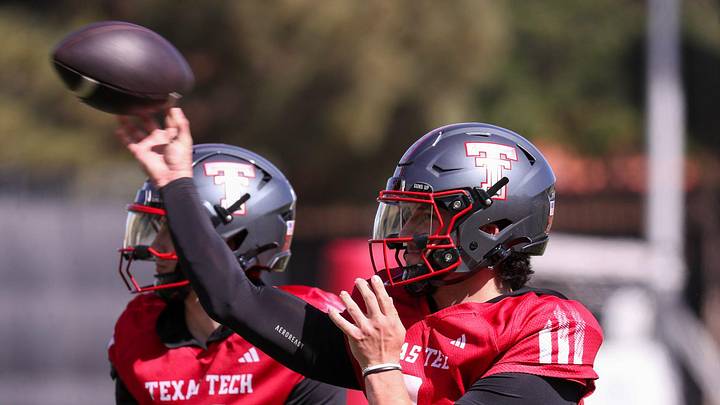
The college football offseason has been captivated by the story of Brendan Sorsby and Texas Tech. When the superstar quarterback announced he was seeking treatment for gambling addiction, it put the NCAA to the test amid their investigation into his gambling history. When it was revealed that Brendan Sorsby bet on his own games while at Indiana, it felt as if his time in college football had to be over.
The NCAA did what it could, ruling Brendan Sorsby ineligible, but it quickly showed they don't have any power in this modern era. Brendan Sorsby took the NCAA to court and was granted an injunction, with the only punishment being that he would be suspended for the first two games of the season.
The win for Sorsby meant major calls for changes in the college sports landscape, as many called on the government to take action, as many bills have been floated this offseason to "Save college sports". What felt like a back breaking moment for the NCAA turned into the schools and conferences taking a major step.
College sports proved they can police themselves
On Monday Night, Brendan Sorsby and Texas Tech announced that they would be parting ways after all the drama; the two sides remained in lockstep throughout. While many online are claiming this is a case of "bullying working", it's actually a case of college conferences and schools actually handling their own business.
While Texas Tech will likely never come out and say it, in the end the other schools and the Big 12 applied far too much pressure for the Red Raiders and Sorsby to continue the fight.
When Brendan Sorsby won his case, the first step against Texas Tech was for schools to start boycotts. Georgia and Nebraska quickly announced they'd be canceling games against Texas Tech in any sport, and other schools followed suit. The move quickly started to put pressure on the Red Raiders to decide if Sorsby was more important than their athletic program as a whole.
The biggest dominoes all fell on Monday Afternoon when the Big 12 started to take action after Texas AG Ken Paxton sent a threatening letter to the league on taking action against the Red Raiders. The conference quickly took to the courts themselves, seeking the ability to actually enact their own rules and sanction Texas Tech.
The conference presidents also held a call on Monday to discuss the potential sanctions they'd hand down on the program. The threat of sanctions like limited revenue sharing payouts, bowl bans, and being held off televised games quickly brought Texas Tech to the point where it felt like they needed to cut bait.
This case now shows that college sports don't need the government to intervene or pass new laws, it simply needs this unity more often. The programs and the Big 12 put pressure on Texas Tech in ways the Red Raiders really couldn't challenge, and it could become a standard moving forward. While Sorsby's story is sad in many ways, the way that everyone enforced punishment on their own should be a moment the NCAA celebrates as they take their sport back.
 Add us as a preferred source on Google