

The landscape of college sports has drastically changed over the past several years leading to calls for a shift back in the other direction. NIL, Revenue Sharing, and the Transfer Portal have given players more power than ever, and the schools have been put in a place where it's harder than ever to build a team.
Frankly put, there's never been a more appealing time to be a college athlete than right now, and it's showing. Players who left college basketball or already played professionally either in America or overseas are trying to come play college basketball. Athletes are being tampered with by schools to cash in by entering the Transfer Portal.
The landscape is "broken" and everyone from head coaches to the conference commissioners are looking to make a change.
Greg Sankey calls for a landscape shift in college sports
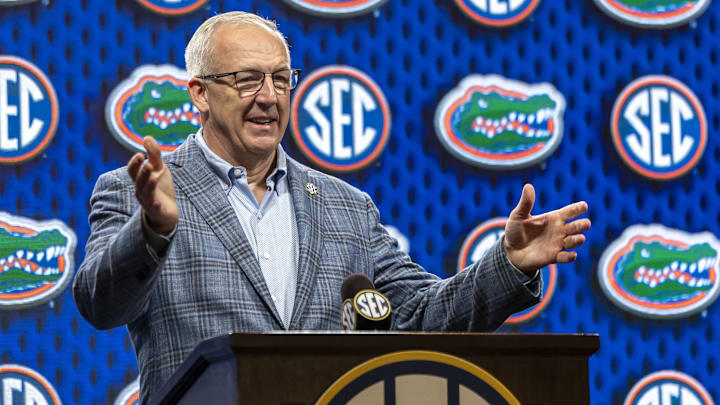
SEC commissioner Greg Sankey is one of the voices with a chance to get these changes as the SEC and the Big Ten are seemingly holding all of the power. On Thursday Night, Greg Sankey attended the Texas vs Georgia Women's Basketball game where he joined the broadcast and laid out where he wants to see a shift made.
Sankey started by laying out how he believes the NCAA should go back to a one-time transfer exception.
"My advocacy would be, hey, we should be back to some type of one-time transfer exception, but we have to support educational continuity if we truly believe that academics is the heart of what we do. And I’m a true believer in that."Greg Sankey
The idea is something that many have called for since the Transfer Portal first opened. The Transfer Portal has since become a tool for players to cash in each offseason rather than it's original intended use, and by enacting these rules, we'd likely see a better product long term.
Greg Sankey then turned to the bigger issue right now which is the fact that players are staying in college sports for too long or trying to return after turning professional. Sankey's stance was already well knwon as he spoke out against Charles Bediako and Alabama.
"Yeah, we should be competitive. We should allow people to make decisions. … This notion that we have 26, 27, 28-year-olds now playing against 19 and 20 year olds. That means there’s fewer opportunities to move from high school into college athletics. That’s not who we’ve been. That’s not who we should be. That’s where we get back to national standards, to the extent conferences need to manage that themselves. I think we’re ready to do that at the presidential level, that the NCAA can do that with kind of some new thinking and new rationale."Greg Sankey
The question now is will the conferences or the NCAA be able to get any of these changes done, or will we continue to see everything challenged. Players have constantly taken the NCAA to court, and in a lot of cases won which has opened the floodgates for players to continue to take advantage of the rules.
The college football offseason should tell us a ton about where the landscape of college sports are heading. The conference commissioners have plenty to work through, and they're all going to need to get on the same page if they're ever going to get what they're pushing for.
 Add us as a preferred source on Google